Sunday, August 2, 2015

Celebrating The Hobo Life

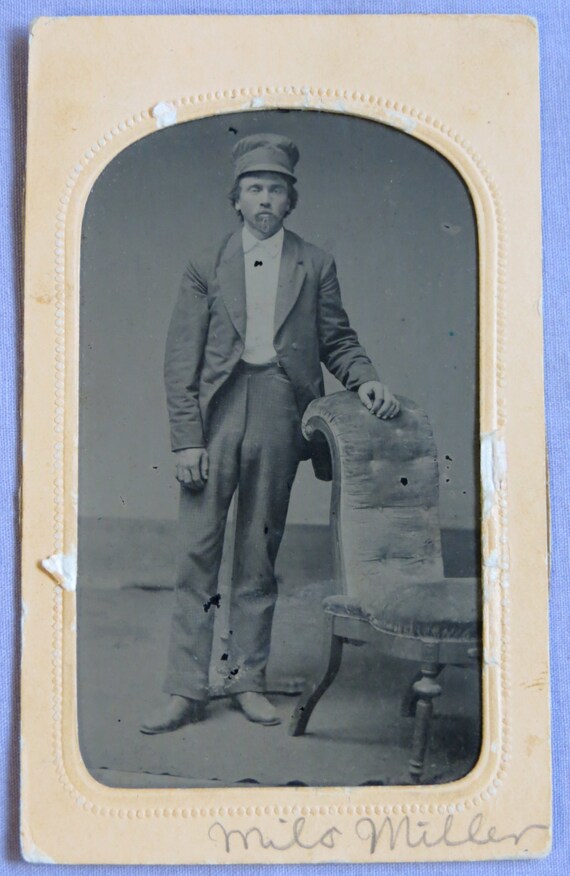
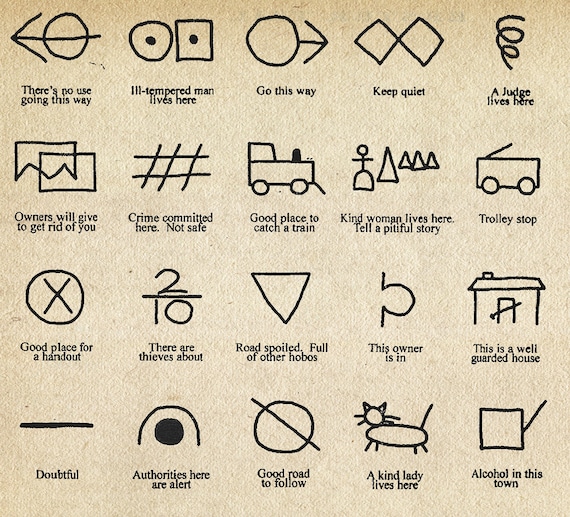
Monday is opening day of the annual, week-long National Hobo Convention in Britt, Iowa (August 3-9, 2015). To celebrate the life of these wandering workers here are a few insights and ephemeral facts and documents related to hobos. From Wikipedia: "A hobo is a migratory worker or homeless vagabond—especially one who is penniless. The term originated in the Western—probably Northwestern—United States around 1890. Unlike "tramps", who work only when they are forced to, and "bums", who do not work at all, "hobos" are traveling workers." The origin of the term hobo is unknown. According to etymologist Anatoly Liberman, the only certain detail about its origin is the word was first noticed in American English circa 1890.[1] Liberman points out that many folk etymologies fail to answer the question: "Why did the word become widely known in California (just there) by the early Nineties (just then)?"[1] Author Todd DePastino has suggested it may be derived from the term hoe-boy meaning "farmhand", or a greeting such as Ho, boy![3] Bill Bryson suggests in Made in America (1998) that it could either come from the railroad greeting, "Ho, beau!" or a syllabic abbreviation of "homeward bound".[4] It could also come from the words "homeless boy" 1. "On Hobos, Hautboys, and Other Beaus". OUPblog. Oxford University Press. November 12, 2008. Retrieved 2009-08-05. 2. Mencken, H.L. (1937). "On the road again". The American Language (4th ed.). grammarphobia.com (July 25, 2009). Archived from the original on 2012-05-05. Retrieved 2013-05-06. 3. Interview with Todd DePastino, author of Citizen Hobo: How a Century of Homelessness Shaped America from the University of Chicago Press website 4. Bryson, Bill (1998). Made in America.[page needed]. ISBN 978-0-380-71381-3. Various periods of American history have stimulated the growth of the Hobo popultation. From the end of the Civil War which saw many displaced veterans hopping the rails in search of work to the surge in the 1890s during the depression of the time. And of course the Great Depression in the 1930's put not only single people but whole families on the road and rails in search of work. 1900 -
    Britt, Iowa and the Hobos
This friendship began with the aspirations of three Britt men, Thomas A. Way, T.A. Potter, and W.E. Bradford, in 1900. Their desire was to gain some attention for the small Iowa town to "do something different to show the world that Britt was a lively little town capable of doing anything that larger cities could do." Way and Potter read a report in the Chicago paper that Tourists Union No. 63 had elected as officers Onion Cotton, of Danville, Illinois and Grand Head Pipe Charles F. Noe, of Sycamore, Illinois. They wrote to Noe and invited him to bring the Hobo Convention to Britt in 1900. Noe wrote them that he would come out to Britt and look the ground over, providing Way and Potter would defray his carfare and expenses. They agreed. It was an autumn day in 1899 that Noe arrived at the Milwaukee depot and was met by Way and Potter. They wined and dined the Grand Head Pipe, then called in an attorney, W.E. Bradford, to guide the proceedings and see that they were legal. They also invited Phil Reed, a newspaper man connected with the Britt News. The four men must have guaranteed that the Hobo Convention would go over big in Britt, for Noe agreed to bring the convention to Britt in 1900 and the 22nd day of August was set as the date. Bailey of Britt, a nationally known humorist and an ardent conventioneer, assumed the publicity end of the promotion, and various other men took responsible positions on the committees. The novelty of the convention appealed to newspaper reporters everywhere, and everyone talked it up, taking the matter as a joke - except the promoters.
From Britt, Iowa homepage: "The Britt hobo logo was first used in the 1900 convention announcements and advertising. The figure used in the ad has been changed very little over the years and is now found around town on school letterheads, the city's watertower, on the highway welcome sign, as well as on restaurant menus. The "Britt hobo" is thought to be Tourist Union 63 President Onion Cotton. Onion Cotton is the hobo who agreed to bring the convention to Britt in 1900."[/caption] Here are a few more links for more info on the National Hobo Convention and Hobo History National Hobo Convention, Britt, Iowa (Aug. 3-9) hobo.com Hobo Museum, Britt, Iowa
    The Millionaire Hobo
Another interesting hobo storyline is the work of James Eads How (1874 - 1930) was an American organizer of the hobo community in the early 20th century. Heir of a wealthy St. Louis family, How chose to live as a hobo and to help the homeless migrant workers. The newspapers often referred to him as the "Millionaire Hobo". How was the founder, driving force, and financier of the International Brotherhood Welfare Association, a union for migrant workers which published Hobo News, and organized hobo colleges and hobo conventions. More about James Eads How on Wikipedia
    Hobo Ephemera:
Here are some links to hobo ephemera available for purchase today: (HOBOES OF AMERICA.) DAVIS, JEFF KING-EMPEROR.A GATHERING OF ORIGINAL HOBO EPHEMERA.
Cincinnati. c.1947. The collection is comprised of : two handwritten correspondences on official "Knights of the Road- Hoboes of America" stationery from Jeff Davis soliciting the newly published "Knights of the Road Scrap Book" along with news concerning recent gatherings and upcoming conventions; A solicitation for funding on official "Knights of the Road- Hoboes of America" stationery with printed notes laid on and bearing the ink stamped signature of Jeff Davis; a handwritten correspondence from Jeff Davis on official "Knights of the Road- Hoboes of America" stationery presenting "Bo Pete" with his 3rd Degree membership credential and signed " Hoboically Yours, Jeff Davis , King and Emperor; a handwritten correspondence from Jeff Davis on official "Knights of the Road- Hoboes of America" stationery relaying some brief news and presenting "Bruce" with his 3rd Degree membership credential and " a card from Jack Dempsey's New York Bar" and signed " Hoboically Yours, Jeff Davis , King and Emperor; a Knights of the Road " Certificate of 3rd degree Knighthood filled in and signed by Davis and bearing an official Hoboes of America official embossed seal;another Knights of the Road " Certificate of 3rd degree Knighthood filled in and signed by Davis and bearing an official Hoboes of America official embossed seal; a small proxy ballot for ratification of Jeff Davis as "King of the Hoboes for Life", to be used if "unable to attend because of war conditions"; a National Membership Card of the International Itinerant Migratory Workers' Union-Hoboes of America, filled in and signed by Jeff Davis;Knights of the Road Membership "Certification of Knighthood" card, filled in and signed by Jeff Davis and bearing the gold embossed official seal of the International Itinerant Migratory Workers' Union-Hoboes of America; Letterhead envelope hand addressed by Jeff Davis and postmarked April 1, 1947. Luminaries listed upon the official Knights of the Road letter-head are. Jack Dempsey, Carl Sandburg,Walter Huston,Supreme Court Justice William O. Douglas, Lowell Thomas -broadcaster, and traveller,Joe Louis- Heavyweight Champ, Jack Dempsey-Heavyweight Champ,Walter Huston - Director, "Gen." Jacob Coxey - Politician and Activist, Arthur Hayday - British Union Leader and Member of Parliament, Monrad Wallgren - Governor and US. Senator. Letter sheets and certificates folded for mailing.Very Good, moderately soiled Envelope opened at side instead of rear. All other pieces in bright, crisp Fine condition. A charming and evocative gathering of American Cultural relics. Item #8719 Price: $750.00

Thursday, May 22, 2014

How To Digitize New York History: Museum of the City of New York Receives $125K Grant from NEH

Great news from the Big Apple for Ephemera lovers. Another example of why we need to support the National Endowment for the Humanities! New York, NY The Museum of the City of New York is pleased to announce the generous support of the National Endowment for the Humanities (NEH) for the project Illuminating New York City History through Material Culture: A Proposal to Process, Catalog, Digitize, and Rehouse the Ephemera Collections of the Museum of the City of New York. The application, submitted to the NEH Humanities Collections and Reference Resources grant opportunity in July 2013, outlines a plan to increase public access to over 6,500 objects of material culture over the course of two years. The materials will eventually be available on the Museum’s online Collections Portal. The Museum was notified of the successful funding of this application in the amount of $125,000 by Senator Kirsten Gillibrand’s office in March 2014, by instruction of the NEH.

Read the full article here: Museum of the City of New York Receives Grant from the National Endowment for the Humanities – BWWVisual ArtsWorld.

http://9milesofephemeraantiques.com/museum-of-the-city-of-new-york-receives-grant-from-the-national-endowment-for-the-humanities-bwwvisual-artsworld/

Thursday, May 15, 2014

Bill Moyers' Essay: What Happened to Obama's Promised Net Neutrality?

Watch this video as Bill Moyers explains with his unmatched clarity, the current fight for Net Neutraliy. Watch now here.
#StopTheSlowLane

Wednesday, May 14, 2014

Fight For The Future


Today websites all across the country will be posting messages to stop the FCC from allowing the likes of Comcast and Time Warner to slow down our internet.
The internet has become part of our Commons, our shared communal space.
Small businesses depend on it for customers.
Families depend on it for information for daily life.
Artists, Writers, and Educators use it to share the ideas that can change our world.

You might know that the Federal Communications Commission is proposing new rules to allow Internet providers to discriminate based on content to provide separate and unequal connection speeds, effectively creating "fast" and "slow" lanes for the Internet. This means that website owners and entrepreneurs like myself may be forced to pay an arbitrary fee to ISPs like Comcast and Time Warner if I want you, my visitors to be able to access your website at regular speeds – or at all.

This is a big issue. ISPs want to extort money from websites they deem profitable enough to pay them extra. We must convince the FCC that this is a terrible idea.
#StopTheSlowLane is an initiative to raise awareness about this issue.

If you care about the free flow of information then please go to Fight For The Future and make your voice heard to your member of Congress.

If you have a website please go to #StopTheSlowLane and put up the message on your site.

Together we can maintain the freedom of our Online Commons!


Thursday, April 24, 2014

Letter from Secretary of War Henry Stimson to President Harry S. Truman, April 24, 1945


In this once secret letter to President Harry S. Truman, Secretary of
War Henry Stimson requested an urgent meeting to discuss the Manhattan
Project, the all-out effort by the Federal Government to build an atomic
bomb during World War II.


Today's Document from the National Archives

Wednesday, April 23, 2014

Biomedical Ephemera, or: A Frog for Your Boils — biomedicalephemera: Man (Homo sapiens sapiens),...

Biomedical Ephemera, or: A Frog for Your Boils — biomedicalephemera: Man (Homo sapiens sapiens),...


Man (Homo sapiens sapiens), Cow (Bos taurus), and Ram (Ovis aries)
The structure of the ruminant animals varies considerably. It’s important for the artist to recognize the vertebral layout and rib structure, even of animals that are covered in thick wool or fur. Wild bovids (such as bison) and aurochs have extended cervical vertebrae that form a “hump” over their shoulders.
A Comparative View of the Human and Animal Frame. B. Waterhouse Hawkins, 1860.
Man (Homo sapiens sapiens), Cow (Bos taurus), and Ram (Ovis aries)


The structure of the ruminant animals varies considerably. It’s
important for the artist to recognize the vertebral layout and rib
structure, even of animals that are covered in thick wool or fur. Wild
bovids (such as bison) and aurochs have extended cervical vertebrae that
form a “hump” over their shoulders.


A Comparative View of the Human and Animal Frame. B. Waterhouse Hawkins, 1860.

Rare Stamps of the Cape of Good Hope | Past & Present | 9 Miles Of Ephemera & Antiques

Rare Stamps of the Cape of Good Hope | Past & Present | 9 Miles Of Ephemera & Antiques


The 1853 stamps marked the first triangular stamps in issue. Messrs
Perkins, Bacon & Co in London, famous book, stamp, and banknote
printers, printed them. Engraver William Humphrys cut their original
die.

Read more about these historic stamps by following the link above.

Rosa Parks Archives Remain Unsold In Warehouse – from The Denver Post | 9 Miles Of Ephemera & Antiques

Mrs. Parks next to a postcard from Dr. Martin Luther King
Rosa Parks archives remain unsold in warehouse – The Denver Post | 9 Miles Of Ephemera & Antiques


Read how Rosa Parks important papers and memorabilia has been caught on a legal battle, leaving all of it locked away from the public.


#ephemera #postcard #rosa parks #history


A Huge Stamp of Approval for the Phila Mercury | 9 Miles Of Ephemera & Antiques

A Huge Stamp of Approval for the Phila Mercury | 9 Miles Of Ephemera & Antiques


If you are a collector, a dealer, or simply have an interest in postal history, you should know about Richard Frajola and his incredibly comprehensive website.


Read more by following the link above.


 <script type='text/javascript' src='http://www.etsy.com/assets/js/etsy_mini_shop.js'></script><script type='text/javascript'>new Etsy.Mini(5874876,'gallery',2,4,1,'http://www.etsy.com');</script>


Thursday, March 6, 2014

Ephemera Fest 2014 Lexington, Kentucky coming May 2014


Are you anywhere near Lexington, KY on May 10th 2014? If so, check out the Ephemera Fest, where independent publishers and artists gather at the Carnegie Center. Celebrating its second year in Lexington, Kentucky, the Ephemera Fest is an educational and inspirational one-day event showcasing zines (self-published magazines), comics, and paper arts including prints, greeting cards, and other handmade items.

The event is free, open to the public, and all-ages. It will feature dozens of tables with works on display and for sale, as well as workshops, classes, film screenings and literature readings. There will also be a raffle and an interactive photo booth by Shooting Frenzy.

Co-organizer Cheyenne Hohman said, “I have always been passionate about writing and publishing zines (pronounced “zeens”), and we are excited to bring in another group of local and regional creators. We expect a significant increase in attendance this year, since the event is happening alongside May Fest.”

Hohman, along with a team of volunteers, co-organized Lexington’s first Ephemera Fest at Smiley Pete Publishing on June 1, 2013. It included 30 presenters from Kentucky, North Carolina, Michigan, Ohio, Indiana and Illinois, and more than 200 attendees over the course of the day.

Ephemera Fest 2014 will take place from 11am-5pm in the Carnegie Center for Literacy and Learning at 251 West Second Street. Table registration is available on a first-come, first-served basis. Proposals for workshops, readings, and other events are being considered through March 31. Sponsorship and volunteer opportunities are also available.

For more info and registration, see <a href="http://ephemerafest.wordpress.com">ephemerafest.wordpress.com</a> or contact ephemerafestival(at)gmail(dot)com.

A history of the modern world as told by everyday throwaway ephemera | Public Radio International

[


Credit: Courtesy Philipp Penka, Special issue of a Russian emigre periodical, published from 1963-65. This issue was published a week after the assassination of John F. Kennedy. The issue begins with an article entitled "Black Friday," describing the view of an Orthodox Russian emigre on the tragic events. The editors were associated with the Russian Orthodox Church abroad.

For myself, collecting Ephemera is an extremely thrilling activity because of the hunt and discovery process. Ephemera hunters are able to find magical, little pieces which in many cases document historical phenomena that aren’t yet recorded. Enjoy a bit of this experience with this article from <a href="http://www.pri.org/people/alina-simone" target="_blank">Alina Simone</a> Using interviews with collectors, Ms. Simone shows us examples of this process of piecing together our shared history.


This article shares in the ephemeral titillation felt by collectors and helps to dispel the myth out there that "everything has already been digitized and is available through Google search."


See the original article here:

<p><a href='http://www.pri.org/stories/2014-02-04/history-modern-world-told-everyday-throwaway-ephemera'>A history of the modern world as told by everyday throwaway ephemera | Public Radio International</a>.</p>

Tuesday, December 31, 2013

Ephemera & Paper Shows 2014


The 2014 Ephemera & Paper Show Calendar is up with dates for upcoming shows in January. More will be added soon!

If you have shows you want to promote please send me the pertinent info to 9MilesOfEphemera@gmail.com or leave a comment on the 2014 Ephemera and Paper Shows calendar page on the 9 Miles of Ephemera Blog

Happy and Successful New Year to All!
Cheers!
cdavid

Ephemera/34 Conference & Paper Show March 14-16, 2014

The Ephemera Society of America (ESA) will be holding its annual three-day conference and fair at Old Greenwich, CT. in mid-March 2014, devoted to sharing and exploring various aspects of ephemera, and to buying ephemera to add to or to start collections. The first day, Friday, is devoted to presentations of papers with a specific theme and to exhibits and book signings by some of our published members and speakers. Saturday and Sunday feature a two-day ephemera fair with dealers from around the world and member forums on Sunday before the fair.

The theme for the conference is “Field to Table: The Ephemera of Food and Drink.”Our essential connection to what the earth produces, and how these sustain us is at the core of our lives. Each step of the process from the field to the table represents a different aspect of our society and its values. The ephemera of food and drink illustrates the different points of view of that story, reflecting how our society has evolved. This narrative includes survival, culinary achievement, hard work, the aesthetics of food and table presentation, balance, culture, health, satisfaction and commerce. What drives us? Our needs and initiatives, the creativity of our inventions and discoveries, our passions and resources are all involved in getting things from the field to the table. Ephemera helps us follow and understand the evolution of these comestibles and potables.

More info to be found at: Ephemera Society Of America website
And at:
9 Miles Of Ephemera Blog

Celebrating 500 Likes On Facebook


I have surpassed 500 Likes on my page so until January 1st, 2014, go to my facebook page and receive a special discount on purchases from my Etsy shop.
Wishing you an Ephemerally Blissful Holiday!
Cheers
cdavid

Monday, May 13, 2013

New Exhibit of Historical Ephemera Opens at Library Company of Philadelphia


Contributed by Erika Piola, Library Company of Philadelphia

Remnants of Everyday Life: Historical Ephemera in the Workplace, Street, and Home highlights the Library Company’s vast collection of ephemera from the 18th to early 20th century. With materials ranging from throw-away items to finely printed works, Remnants of Everyday Life considers the cultural impact of advancements in mass production technologies. The exhibition will address the evolution of the graphic design of ephemera; the gendering of ephemera associated with the home, such as scrapbooks; the changing nature of leisure activities and consumerism over the course of the 19th century; and the life-cycle of commercial ephemera between the workplace, street, and home.

Remnants will exhibit broadsides, playbills, fliers, postcards, trade cards, tickets, menus, World’s Fair souvenirs, labels, stereographs, albums, scrapbooks, paper dolls and other ephemeral toys and games, and advertisements. Specific examples include the 1897 billhead for Mrs. Henrietta S. Duterte, an African American undertaker and possibly the first female embalmist in the country; examples of Victorian-era paper bags, including the then novel “Square Bag” patented in 1872; the seminal 1870 printing manual Typographia, which broke new ground for commercial graphic design—and one of the first illustrated circus posters issued in 1828.

The Library Company has one of the largest, most important and most varied collections of early American ephemera in existence. In Spring 2012, the Library Company completed a two-year project to arrange, catalog, and selectively digitize nearly 30,000 pieces of 18th- and 19th-centry ephemera funded by the National Endowment of the Humanities.

An outgrowth of this project, Remnants of Everyday Life, curated by Visual Culture Program co-Directors Rachel D’Agostino and Erika Piola, is on view from Monday, May 13, through Friday, December 13, 2013. The conference Unmediated History: The Scholarly Study of 19th-Century Ephemera co-sponsored by the Library Company’s Visual Culture Program (VCP at LCP) and The Ephemera Society of America scheduled in conjunction with the exhibition will be held September 19-20, 2013.The exhibition and its accompanying programming are supported by funds from the Pennsylvania Council on the Arts and the Philadelphia Cultural Fund.
From: Delaware Valley Archivists Group

Wednesday, April 3, 2013

Ephemera Preservation

Ran across this article which has some great advice about preservation and storage of your ephemera collection. Be sure to check out the link at the bottom of the post for a free eBook on ephemera preservation. Happy treasure hunting.


Most ephemera can be effectively handled by putting them in inexpensive polypropylene sheet protectors, and keeping these in a binder. The two clear sides of the protectors allow viewing of the items without destructive handling. Typically newspapers would have the relevant item cut out (either including the newspaper name, date, and page from the same sheet, or with that information noted on the retained item). Most items will fit into letter-sized protectors, but some may need some larger format.

Digital preservation is important, since the information can be better preserved and shared by having multiple backup and distributed copies. Flatbed scanners are usually the tool of choice to generate the images. 300 dpi (dots per inch) scan resolution is a good rule of thumb, although it may be more than needed for newspaper-like items. I like to name each scan file with the year, person and short subject indication. For cataloging, I usually rely on the descriptive filenames, which can be viewed and searched via the computer's normal mechanisms. For a few kinds of items for which it seems important, I make text files with greater detail about the contents.

DON'T use the cheap plastic envelopes to keep your original paper records in. The chemicals in them destroy the contents over time. Use proper archive quality plastic envelopes if you wish to keep them in good order for future generations. – Colin Mar 20 at 7:26

I would start by investing in some (archival-quality) plastic binder pockets. For digital storage, a small flatbed scanner will get a better image, but a digital camera is also fine for recording a digital copy. Try to organize as you go (slip an article into the plastic, scan/photograph it, and then record any additional notes about it), although I would prioritize physical organization if you're finding it overwhelming or you're facing a time constraint.

The great thing about using binder pockets (assuming things will fit in them) is that it's simple to:

1. take the binder to a family reunion and let everybody page through it

2. drastically reduce the possibility of damaging something while reading

3. take the collection to a library or other archive to look up vital records

4. reorganize the order

5. group by event (wedding, death, birth, etc.)

6. group pieces by family

7. group pieces by generation

8. or change your mind halfway through and switch your organization around!

Try to include your grandmother or other older relatives in the preservation process as much as possible -- hopefully they will be thrilled that you're excited about your family history and want to share all sorts of stories about the newspaper articles, photographs, etc. (Ironically, this makes the job of "family historian" harder, since you not only need to preserve the physical object, but also organize associated stories -- but it is so, so worthwhile. The number of details and even new family relationships that I learned about when reading through newspaper articles with my grandmother was astounding.)


Ephemera comes in all shapes and sizes. Check out The Heirloom Registry to preserve the stories attached to ephemera found around the house. The online registry allows users to preserve and share the stories behind family heirlooms and precious belongings. You can see the Heirloom Registry sticker on the bottom of my teacup in this picture.

As another person mentioned, digital records, as simple as taking an image with your cell phone, are a good way to capture the information. I have done this with great success in photographing an old scrapbook full of newspaper clippings my grandfather made. I can zoom in and read all the text in the article clippings. The challenge with this is HOW DO YOU ADD CONTEXT AND METADATA TO A DIGITAL FILE? And therein lays the crux of your question. I would suggest that you do as the archivists would do. Assign each piece of ephemera it's own unique identifier (number) and then in a separate document (notebook, text file or database) record the number and then all the contextual information you know about it. Like "Grandma clipped this out of the Washington Post when Aunt Mabel died" or "Cousin Grace gave Grandma this muffin recipe in 1960 - Grandma made it once, but thought it had too much baking soda, so she adjusted the recipe. She said it was Grandpa's favorite :)"


I've been scanning the family photo albums and doing some acid-free repair as I go. I have a high quality flatbed scanner and have done the photos separately (both sides if there's anything on the reverse) and transcribed any writing on the photo, photo back or page captions into the jpeg files information.

Then I set up a camera and photograph the entire album page with all photos on it. Context can be important.

After I have a set done, I put the photos up on a photoshare site (SmugMug in my case) in a private gallery so I can share them out and have an online backup of the information.

My next project is all the stories my grandmother handwrote to my siblings and I when we were children relating her growing up in Texas and New Mexico during the great depression. They are priceless to all our family.


There is now a free eBook in PDF format available from here all about preservation of records that is well worth downloading and reading imho.

Free Ebook about ephemera preservation:
http://www.digitalpreservation.gov/documents/ebookpdf_march18.pdf

Tuesday, March 19, 2013

An Older View of Washington State

Clyde Grainger 1909 Topographical Map of Washington State

From research I have gleaned that Grainger did this map while working after college for the Washington State in putting together various projects on the geology, topography, and road materials of the state. Some of this work was collected in the Washington Bulletin of 1911, The Road Materials of Washington, by Henry Landes, assisted by Olaf Stromme and Clyde Grainger.
Soon after this project, Grainger moved on to drafting for architect Harlan Thomas in Seattle.
From Thomas’ biography with Pacific Coast Architecture Database:
https://digital.lib.washington.edu/architect/architects/2255/
“About 1910, Thomas entered into the first of several partnerships which would be the focus of his professional career thereafter:
Thomas, Russell and Rice
Thomas and Grainger
Thomas, Grainger and Thomas (with Clyde Grainger (1887–1958) and his own son, Donald P. Thomas (1898–1970)).
Among the best known of the projects of these partnerships are the Corner Market Building (1911–12) in the Pike Place Market, and (in joint venture with W. Marbury Somervell) several branch libraries in Seattle—Queen Anne, Columbia, and Henry L. Yesler (now Douglass-Truth). The best-known project of the Thomas, Grainger and Thomas partnership is the Art Deco-influenced Harborview Hospital (1929–31).
Pikes place design:
The 3-story Corner Market building (Harlan Thomas & Clyde Grainger 1912; rehabilitation by Karlis Rekevics, 1975) sits on the right as one enters the Market along Pike Street. In its early years it included daystalls, and the businesses facing onto First Avenue were open-fronted. The Three Girls Bakery, the first known business in the Corner Market, is now located in the adjacent Sanitary Market. The basement was home to Patti Summers’ jazz club for over two decades before becoming Can Can in 2006; the building is also home to anarchist bookstore Left Bank Books, as well as numerous other businesses.[139][142][143]
Following his career as an Architect, Grainger served on the Seattle Planning Commission.
In December 1951 the Wedgwood District Community Club appealed to the Seattle City Planning Commission to disapprove applications for the construction of duplex houses at 7518 43rd Ave NE and 4303 NE 77th Street. The three-man committee of the Planning Commission which took the arguments under study, was headed by architect Clyde Grainger. Grainger certainly was familiar with Wedgwood as he, along with architect Harlan Thomas, had designed Albert Balch’s original Wedgwood-development houses in 1940. Clyde Grainger lived in View Ridge one block over from Albert Balch’s own home on 50th Ave NE. By the late 1940’s Harlan Thomas had retired, but Grainger still worked at their architectural office and Grainger continued to contribute to the development of Wedgwood. In the period 1948 to 1951 Grainger’s architectural firm, which included Harlan Thomas’ son Donald Thomas, designed Balch’s office buildings from 8014 to 8050 35th Ave NE.
This piece is available on etsy.com at 9 Miles of Wonder on Etsy
    Upcoming Ephemera Shows Around The U.S.
2/24/2013 -
(CAN)
Toronto Postcard Club 32nd Annual Show
The Japanese Canadian Cultural Centre
6 Garamond Court
Toronto, ON
View Map 10 am – 5 pm Postcard Show Admission: $7.00 ~ TPC Member admission $5.00
Maine Antique Paper Show
March 24, 8:30am to 3pm
Fireside Inn, 81 Riverside Street, Portland, ME
207 749-1717


Thursday, February 28, 2013

Ephemera Society of America Annual Conference & Fair coming in March


The Ephemera Society of America is an international organization of collectors, dealers, scholars, museums, libraries, and everyone interested in the world of paper and printing. We appreciate all aspects of ephemera, and encourage collecting, scholarship and artistry.
The Time & Place
Ephemera 33, our Conference and Fair, to be held March 15-17, at the Hyatt Regency Hotel in Old Greenwich, Connecticut, is THE major event for our passion. We look forward to seeing you all for the weekend. For particulars and easy registration see the panel on the right.

The Conference


This year, a special program on the theme of "Ephemera: Art and Commerce" is intended to inspire and attract people who are enamored by its aesthetics, history, and applications. The program is followed by a two-day fair with 70 leading ephemera dealers

The conference will explore the multifaceted relationship between art and ephemera. Art and ephemera "intersect" at several junctions:


Ephemera may be classified as an art object, collected and studied primarily for its beauty and design rather than for its content.

Ephemera naturally reflects the artistic style (e.g. Victorian, Arts and Crafts, Art Nouveau, Wiener Werkstätte, Art Deco) of its period.

Ephemera relates to art in that we can sometimes trace the historical evolution of images appearing on ephemera (art history).

Ephemera relates to art in that over the course of history it has the transformative power to become art.

Art relates to ephemera in the similar methods that are used to create both.

Art relates to ephemera in that letterpress printers making ephemera had to develop new artistic techniques in order to compete with other methods of creating ephemera including chromolithography and engraving. These printers had to think of new "artistic" ways to use seemingly confining metal type.

Art relates to ephemera in that artists use ephemera to create art.

Perhaps the above points about art and ephemera have caused your creative juices to begin to flow. Fear not, for the conference will also provide an opportunity for participants to create art, using ephemera, under the tutelage of two well-known artisans. The materials for this adventure will be supplied.


The Ephemera Fair

Not to be out shadowed by the conference on Saturday and Sunday, March 16-17, the International Ephemera Fair with 70 select ephemera sellers from California to Maine, and Canada and England, will set up shop in the grand ballroom and promenade of the hotel, exhibiting a wide array of materials ranging from posters to friendship tokens, historical memorabilia to invitations, trade cards and manuscripts. America's finest dealers in antique and vintage ephemera constitute an invaluable resource for collectors, researchers, scholars, curators and librarians to learn about ephemera, acquire ephemera, and make contact with ephemera collectors and dealers in a wide variety of subjects and formats. The Ephemera Fair is an essential link between collectors, dealers, institutions, and academia.

A bit of ephemera for every collecting interest. Entry to the fair is $12 for adults, Youths 12-21, $6.

The expert speakers on March 15, the Fair on March 16 and 17, and the formidable workshops on March 17, are helping to create what we believe is a landmark event for the world of printing and art and ephemera. We hope to see you there, and please share this information so that people can add it to their calendar; Greenwich is a short ride from New York City.

Sunday, February 24, 2013

Winterthur Acquires Renowned Ephemera Collection

WINTERTHUR, Del. – Winterthur has made the largest single gift purchase in its history with the addition of the John and Carolyn Grossman Collection, one of the most comprehensive archives of period graphic ephemera ever to have been assembled.

     On loan to Winterthur since 2008, the Grossman Collection represents approximately 250,000 vividly colored, printed items portraying life in America from 1820 to 1920. Ephemera represents a host of materials designed to circulate in society for only a brief time, including greeting cards, product labels, baseball cards, postcards, scrapbooks, calendars, paper dolls, sheet music, event tickets and more."
    Since printed ephemera typically lasts for such a short time, the Grossmans have performed a heroic task in saving so much of it and making it available to the public through the Winterthur Library," said E. Richard McKinstry, Winterthur library director and Andrew W. Mellon senior librarian. "Images portrayed on ephemera are sometimes the only ones to have survived that document life in America and other countries a century and more ago."

    The collection documents the methods of lithography and chromolithography and all they represented visually from the early 19th through the early 20th centuries. Images portray the customs, attitudes and ideals of Victorian and Edwardian life: innocent children, garden-fresh flowers, romantic couples, holiday traditions, fashionable women, anthropomorphic animals and cigar-smoking gentlemen.

    Among the collection's treasures is the first commercially produced Christmas card, printed in 1843 in England, along with its printer's proof. The Grossmans also saved the extraordinary archive of the George Schlegel Lithographic Co., a 19th-and 20th-century business in New York City that specialized in printing cigar box labels.

Winterthur has showcased the collection in its library exhibitions and in the museum's Yuletide displays. It has been a magnet for students and researchers, especially those interested in Winterthur's Research Fellowship Program. The graphic materials also have been used successfully in Winterthur's licensing and marketing efforts.

     McKinstry said that having the Grossman Collection permanently housed at Winterthur further solidifies the library's status as a center for advanced research.
"Winterthur is deeply grateful to John and Carolyn Grossman for making this remarkable collection available not only to scholars, Winterthur staff and our visitors, but also to thousands of researchers, who can now access these materials through the Winterthur Library online," McKinstry said.

    Dr. Katherine C. Grier, a University of Delaware history professor, said the collection enhances Winterthur's holdings enough to seal its reputation as having "the No. 1 research library in the country for the study of visual culture in America between the 1860s and 1920s." Grier, a former member of Winterthur's Academic Programs Department, said the collection gives Winterthur sufficient depth to serve as an unparalleled resource on topics such as the history of printing technology, the history of graphic design, and the history of advertising and marketing.

     In relation to social and cultural history, the collection can be mined for information on such topics as: evolving ideals of domestic life, the construction of race and ethnicity, the changing nature of gender identity, the history of sexuality, the history of leisure and sport, the history of childhood, and such topics as foodways, popular medicine and dress.

To learn more about Winterthur's Grossman Collection, visit winterthur.org.</p><p>via <a href='http://acn.liveauctioneers.com/index.php/auctions/upcoming-auctions/9247-winterthur-acquires-renowned-ephemera-collection'>Winterthur acquires renowned ephemera collection</a>.</p>

Reposted from Liveauctioneers.com

Friday, February 8, 2013

Digital Ephemera Stewardship


Kristopher F. Nelson from the Library of Congress’s Office of Strategic Initiatives sent out an email this morning about a new program. We should always happy to help out the good folks at the Library of Congress–keepers of our nation’s best ephemera. And, if you want to spread the word across your social networks by linking to this post, I’m sure Kristopher would appreciate it.

The Library of Congress and The Institute of Museum and Library Services are pleased to announce that the call for applications for the inaugural National Digital Stewardship Residency (NDSR) class will begin next week.

The NDSR program will allow ten recent graduates of Master’s degree programs in relevant fields to complete a nine-month residency at various institutions in the Washington, D.C. area. The entire list of projects can currently be found on the NDSR Web site .

Institutions that will be hosting residents include:

Association of Research Librarians

Dumbarton Oaks Research Library

Folger Shakespeare Library

The Library of Congress

Maryland Institute for Technology in the Humanities / University of Maryland Libraries

National Library of Medicine

The National Security Archive

Public Broadcasting Service

Smithsonian Institution Archives

The World Bank
 
Beginning in September 2013, accepted residents will attend an intensive two-week digital stewardship workshop at the Library of Congress. Thereafter, residents will begin their experience at a host institution to work on significant digital stewardship projects. Their projects will allow them to acquire hands-on knowledge and skills involving the collection, selection, management, long-term preservation, and accessibility of digital assets.
 Additional information about NDSR can be found at
www.digitalpreservation.gov/ndsr.

NSDR has great resources for individuals as well on preserving and maintiaining your digital collections.

Application instructions will be available next week.

Reblogged from from ephemera by martyweil