Ran across this article which has some great advice about preservation and storage of your ephemera collection. Be sure to check out the link at the bottom of the post for a free eBook on ephemera preservation. Happy treasure hunting.
Most ephemera can be effectively handled by putting them in inexpensive polypropylene sheet protectors, and keeping these in a binder. The two clear sides of the protectors allow viewing of the items without destructive handling. Typically newspapers would have the relevant item cut out (either including the newspaper name, date, and page from the same sheet, or with that information noted on the retained item). Most items will fit into letter-sized protectors, but some may need some larger format.
Digital preservation is important, since the information can be better preserved and shared by having multiple backup and distributed copies. Flatbed scanners are usually the tool of choice to generate the images. 300 dpi (dots per inch) scan resolution is a good rule of thumb, although it may be more than needed for newspaper-like items. I like to name each scan file with the year, person and short subject indication. For cataloging, I usually rely on the descriptive filenames, which can be viewed and searched via the computer's normal mechanisms. For a few kinds of items for which it seems important, I make text files with greater detail about the contents.
DON'T use the cheap plastic envelopes to keep your original paper records in. The chemicals in them destroy the contents over time. Use proper archive quality plastic envelopes if you wish to keep them in good order for future generations. – Colin Mar 20 at 7:26
I would start by investing in some (archival-quality) plastic binder pockets. For digital storage, a small flatbed scanner will get a better image, but a digital camera is also fine for recording a digital copy. Try to organize as you go (slip an article into the plastic, scan/photograph it, and then record any additional notes about it), although I would prioritize physical organization if you're finding it overwhelming or you're facing a time constraint.
The great thing about using binder pockets (assuming things will fit in them) is that it's simple to:
1. take the binder to a family reunion and let everybody page through it
2. drastically reduce the possibility of damaging something while reading
3. take the collection to a library or other archive to look up vital records
4. reorganize the order
5. group by event (wedding, death, birth, etc.)
6. group pieces by family
7. group pieces by generation
8. or change your mind halfway through and switch your organization around!
Try to include your grandmother or other older relatives in the preservation process as much as possible -- hopefully they will be thrilled that you're excited about your family history and want to share all sorts of stories about the newspaper articles, photographs, etc. (Ironically, this makes the job of "family historian" harder, since you not only need to preserve the physical object, but also organize associated stories -- but it is so, so worthwhile. The number of details and even new family relationships that I learned about when reading through newspaper articles with my grandmother was astounding.)
Ephemera comes in all shapes and sizes. Check out The Heirloom Registry to preserve the stories attached to ephemera found around the house. The online registry allows users to preserve and share the stories behind family heirlooms and precious belongings. You can see the Heirloom Registry sticker on the bottom of my teacup in this picture.
As another person mentioned, digital records, as simple as taking an image with your cell phone, are a good way to capture the information. I have done this with great success in photographing an old scrapbook full of newspaper clippings my grandfather made. I can zoom in and read all the text in the article clippings. The challenge with this is HOW DO YOU ADD CONTEXT AND METADATA TO A DIGITAL FILE? And therein lays the crux of your question. I would suggest that you do as the archivists would do. Assign each piece of ephemera it's own unique identifier (number) and then in a separate document (notebook, text file or database) record the number and then all the contextual information you know about it. Like "Grandma clipped this out of the Washington Post when Aunt Mabel died" or "Cousin Grace gave Grandma this muffin recipe in 1960 - Grandma made it once, but thought it had too much baking soda, so she adjusted the recipe. She said it was Grandpa's favorite :)"
I've been scanning the family photo albums and doing some acid-free repair as I go. I have a high quality flatbed scanner and have done the photos separately (both sides if there's anything on the reverse) and transcribed any writing on the photo, photo back or page captions into the jpeg files information.
Then I set up a camera and photograph the entire album page with all photos on it. Context can be important.
After I have a set done, I put the photos up on a photoshare site (SmugMug in my case) in a private gallery so I can share them out and have an online backup of the information.
My next project is all the stories my grandmother handwrote to my siblings and I when we were children relating her growing up in Texas and New Mexico during the great depression. They are priceless to all our family.
There is now a free eBook in PDF format available from here all about preservation of records that is well worth downloading and reading imho.
Free Ebook about ephemera preservation:
http://www.digitalpreservation.gov/documents/ebookpdf_march18.pdf
Wednesday, April 3, 2013

Tuesday, March 19, 2013
An Older View of Washington State
Clyde Grainger 1909 Topographical Map of Washington State


From research I have gleaned that Grainger did this map while working after college for the Washington State in putting together various projects on the geology, topography, and road materials of the state. Some of this work was collected in the Washington Bulletin of 1911, The Road Materials of Washington, by Henry Landes, assisted by Olaf Stromme and Clyde Grainger.
Soon after this project, Grainger moved on to drafting for architect Harlan Thomas in Seattle.
From Thomas’ biography with Pacific Coast Architecture Database:
https://digital.lib.washington.edu/architect/architects/2255/
“About 1910, Thomas entered into the first of several partnerships which would be the focus of his professional career thereafter:
Thomas, Russell and Rice
Thomas and Grainger
Thomas, Grainger and Thomas (with Clyde Grainger (1887–1958) and his own son, Donald P. Thomas (1898–1970)).
Thomas, Russell and Rice
Thomas and Grainger
Thomas, Grainger and Thomas (with Clyde Grainger (1887–1958) and his own son, Donald P. Thomas (1898–1970)).
Among the best known of the projects of these partnerships are the Corner Market Building (1911–12) in the Pike Place Market, and (in joint venture with W. Marbury Somervell) several branch libraries in Seattle—Queen Anne, Columbia, and Henry L. Yesler (now Douglass-Truth). The best-known project of the Thomas, Grainger and Thomas partnership is the Art Deco-influenced Harborview Hospital (1929–31).
Pikes place design:
The 3-story Corner Market building (Harlan Thomas & Clyde Grainger 1912; rehabilitation by Karlis Rekevics, 1975) sits on the right as one enters the Market along Pike Street. In its early years it included daystalls, and the businesses facing onto First Avenue were open-fronted. The Three Girls Bakery, the first known business in the Corner Market, is now located in the adjacent Sanitary Market. The basement was home to Patti Summers’ jazz club for over two decades before becoming Can Can in 2006; the building is also home to anarchist bookstore Left Bank Books, as well as numerous other businesses.[139][142][143]
The 3-story Corner Market building (Harlan Thomas & Clyde Grainger 1912; rehabilitation by Karlis Rekevics, 1975) sits on the right as one enters the Market along Pike Street. In its early years it included daystalls, and the businesses facing onto First Avenue were open-fronted. The Three Girls Bakery, the first known business in the Corner Market, is now located in the adjacent Sanitary Market. The basement was home to Patti Summers’ jazz club for over two decades before becoming Can Can in 2006; the building is also home to anarchist bookstore Left Bank Books, as well as numerous other businesses.[139][142][143]
Following his career as an Architect, Grainger served on the Seattle Planning Commission.
In December 1951 the Wedgwood District Community Club appealed to the Seattle City Planning Commission to disapprove applications for the construction of duplex houses at 7518 43rd Ave NE and 4303 NE 77th Street. The three-man committee of the Planning Commission which took the arguments under study, was headed by architect Clyde Grainger. Grainger certainly was familiar with Wedgwood as he, along with architect Harlan Thomas, had designed Albert Balch’s original Wedgwood-development houses in 1940. Clyde Grainger lived in View Ridge one block over from Albert Balch’s own home on 50th Ave NE. By the late 1940’s Harlan Thomas had retired, but Grainger still worked at their architectural office and Grainger continued to contribute to the development of Wedgwood. In the period 1948 to 1951 Grainger’s architectural firm, which included Harlan Thomas’ son Donald Thomas, designed Balch’s office buildings from 8014 to 8050 35th Ave NE.
This piece is available on etsy.com at 9 Miles of Wonder on Etsy
- Upcoming Ephemera Shows Around The U.S.
2/24/2013 -
(CAN)
Toronto Postcard Club 32nd Annual Show
The Japanese Canadian Cultural Centre
6 Garamond Court
Toronto, ON
View Map 10 am – 5 pm Postcard Show Admission: $7.00 ~ TPC Member admission $5.00
(CAN)
Toronto Postcard Club 32nd Annual Show
The Japanese Canadian Cultural Centre
6 Garamond Court
Toronto, ON
View Map 10 am – 5 pm Postcard Show Admission: $7.00 ~ TPC Member admission $5.00
Maine Antique Paper Show
March 24, 8:30am to 3pm
Fireside Inn, 81 Riverside Street, Portland, ME
207 749-1717
March 24, 8:30am to 3pm
Fireside Inn, 81 Riverside Street, Portland, ME
207 749-1717
Thursday, February 28, 2013
Ephemera Society of America Annual Conference & Fair coming in March
The Ephemera Society of America is an international organization of collectors, dealers, scholars, museums, libraries, and everyone interested in the world of paper and printing. We appreciate all aspects of ephemera, and encourage collecting, scholarship and artistry.
The Time & Place
Ephemera 33, our Conference and Fair, to be held March 15-17, at the Hyatt Regency Hotel in Old Greenwich, Connecticut, is THE major event for our passion. We look forward to seeing you all for the weekend. For particulars and easy registration see the panel on the right.
The Conference
This year, a special program on the theme of "Ephemera: Art and Commerce" is intended to inspire and attract people who are enamored by its aesthetics, history, and applications. The program is followed by a two-day fair with 70 leading ephemera dealers
The conference will explore the multifaceted relationship between art and ephemera. Art and ephemera "intersect" at several junctions:
Ephemera may be classified as an art object, collected and studied primarily for its beauty and design rather than for its content.
Ephemera naturally reflects the artistic style (e.g. Victorian, Arts and Crafts, Art Nouveau, Wiener Werkstätte, Art Deco) of its period.
Ephemera relates to art in that we can sometimes trace the historical evolution of images appearing on ephemera (art history).
Ephemera relates to art in that over the course of history it has the transformative power to become art.
Art relates to ephemera in the similar methods that are used to create both.
Art relates to ephemera in that letterpress printers making ephemera had to develop new artistic techniques in order to compete with other methods of creating ephemera including chromolithography and engraving. These printers had to think of new "artistic" ways to use seemingly confining metal type.
Art relates to ephemera in that artists use ephemera to create art.
Perhaps the above points about art and ephemera have caused your creative juices to begin to flow. Fear not, for the conference will also provide an opportunity for participants to create art, using ephemera, under the tutelage of two well-known artisans. The materials for this adventure will be supplied.
The Ephemera Fair
Not to be out shadowed by the conference on Saturday and Sunday, March 16-17, the International Ephemera Fair with 70 select ephemera sellers from California to Maine, and Canada and England, will set up shop in the grand ballroom and promenade of the hotel, exhibiting a wide array of materials ranging from posters to friendship tokens, historical memorabilia to invitations, trade cards and manuscripts. America's finest dealers in antique and vintage ephemera constitute an invaluable resource for collectors, researchers, scholars, curators and librarians to learn about ephemera, acquire ephemera, and make contact with ephemera collectors and dealers in a wide variety of subjects and formats. The Ephemera Fair is an essential link between collectors, dealers, institutions, and academia.
A bit of ephemera for every collecting interest. Entry to the fair is $12 for adults, Youths 12-21, $6.
The expert speakers on March 15, the Fair on March 16 and 17, and the formidable workshops on March 17, are helping to create what we believe is a landmark event for the world of printing and art and ephemera. We hope to see you there, and please share this information so that people can add it to their calendar; Greenwich is a short ride from New York City.

Sunday, February 24, 2013
Winterthur Acquires Renowned Ephemera Collection
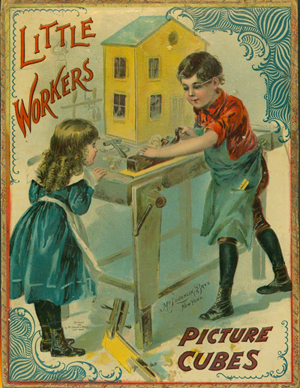
On loan to Winterthur since 2008, the Grossman Collection represents approximately 250,000 vividly colored, printed items portraying life in America from 1820 to 1920. Ephemera represents a host of materials designed to circulate in society for only a brief time, including greeting cards, product labels, baseball cards, postcards, scrapbooks, calendars, paper dolls, sheet music, event tickets and more."
Since printed ephemera typically lasts for such a short time, the Grossmans have performed a heroic task in saving so much of it and making it available to the public through the Winterthur Library," said E. Richard McKinstry, Winterthur library director and Andrew W. Mellon senior librarian. "Images portrayed on ephemera are sometimes the only ones to have survived that document life in America and other countries a century and more ago."
The collection documents the methods of lithography and chromolithography and all they represented visually from the early 19th through the early 20th centuries. Images portray the customs, attitudes and ideals of Victorian and Edwardian life: innocent children, garden-fresh flowers, romantic couples, holiday traditions, fashionable women, anthropomorphic animals and cigar-smoking gentlemen.
Among the collection's treasures is the first commercially produced Christmas card, printed in 1843 in England, along with its printer's proof. The Grossmans also saved the extraordinary archive of the George Schlegel Lithographic Co., a 19th-and 20th-century business in New York City that specialized in printing cigar box labels.
Winterthur has showcased the collection in its library exhibitions and in the museum's Yuletide displays. It has been a magnet for students and researchers, especially those interested in Winterthur's Research Fellowship Program. The graphic materials also have been used successfully in Winterthur's licensing and marketing efforts.
McKinstry said that having the Grossman Collection permanently housed at Winterthur further solidifies the library's status as a center for advanced research.
"Winterthur is deeply grateful to John and Carolyn Grossman for making this remarkable collection available not only to scholars, Winterthur staff and our visitors, but also to thousands of researchers, who can now access these materials through the Winterthur Library online," McKinstry said.
Dr. Katherine C. Grier, a University of Delaware history professor, said the collection enhances Winterthur's holdings enough to seal its reputation as having "the No. 1 research library in the country for the study of visual culture in America between the 1860s and 1920s." Grier, a former member of Winterthur's Academic Programs Department, said the collection gives Winterthur sufficient depth to serve as an unparalleled resource on topics such as the history of printing technology, the history of graphic design, and the history of advertising and marketing.
In relation to social and cultural history, the collection can be mined for information on such topics as: evolving ideals of domestic life, the construction of race and ethnicity, the changing nature of gender identity, the history of sexuality, the history of leisure and sport, the history of childhood, and such topics as foodways, popular medicine and dress.
To learn more about Winterthur's Grossman Collection, visit winterthur.org.</p><p>via <a href='http://acn.liveauctioneers.com/index.php/auctions/upcoming-auctions/9247-winterthur-acquires-renowned-ephemera-collection'>Winterthur acquires renowned ephemera collection</a>.</p>
Reposted from Liveauctioneers.com
Friday, February 8, 2013
Digital Ephemera Stewardship

Kristopher F. Nelson from the Library of Congress’s Office of Strategic Initiatives sent out an email this morning about a new program. We should always happy to help out the good folks at the Library of Congress–keepers of our nation’s best ephemera. And, if you want to spread the word across your social networks by linking to this post, I’m sure Kristopher would appreciate it.
The Library of Congress and The Institute of Museum and Library Services are pleased to announce that the call for applications for the inaugural National Digital Stewardship Residency (NDSR) class will begin next week.
The NDSR program will allow ten recent graduates of Master’s degree programs in relevant fields to complete a nine-month residency at various institutions in the Washington, D.C. area. The entire list of projects can currently be found on the NDSR Web site .
Institutions that will be hosting residents include:
Association of Research Librarians
Dumbarton Oaks Research Library
Folger Shakespeare Library
The Library of Congress
Maryland Institute for Technology in the Humanities / University of Maryland Libraries
National Library of Medicine
The National Security Archive
Public Broadcasting Service
Smithsonian Institution Archives
The World Bank
Beginning in September 2013, accepted residents will attend an intensive two-week digital stewardship workshop at the Library of Congress. Thereafter, residents will begin their experience at a host institution to work on significant digital stewardship projects. Their projects will allow them to acquire hands-on knowledge and skills involving the collection, selection, management, long-term preservation, and accessibility of digital assets.
Additional information about NDSR can be found at
www.digitalpreservation.gov/ndsr.
NSDR has great resources for individuals as well on preserving and maintiaining your digital collections.
Application instructions will be available next week.
Reblogged from from ephemera by martyweil
Thursday, January 31, 2013
Pieces of Paper: Ephemera as Witness to History!
Great article on how Ephemera can inform your discovery of a more complete family and community history.
Check this out and share it.
http://info.flip-pal.com/genealogy-blog/bid/93628/Witness-to-History-The-Ephemera-of-Our-Lives

Check this out and share it.
http://info.flip-pal.com/genealogy-blog/bid/93628/Witness-to-History-The-Ephemera-of-Our-Lives
Wednesday, January 30, 2013
EPHEMERA RESCUE

Irreplaceable Playbills, Costumes And Ephemera Rescued From Coconut Grove
Http://9milesofephemeraantiques.com/?p=148
Subscribe to:
Posts (Atom)